An origin story
How we got here — and how we get out.
In which the internet is created, the SaaS era falls upon us, four horsemen ride out, and a new Eden is built one Postgres table at a time.
In the beginning
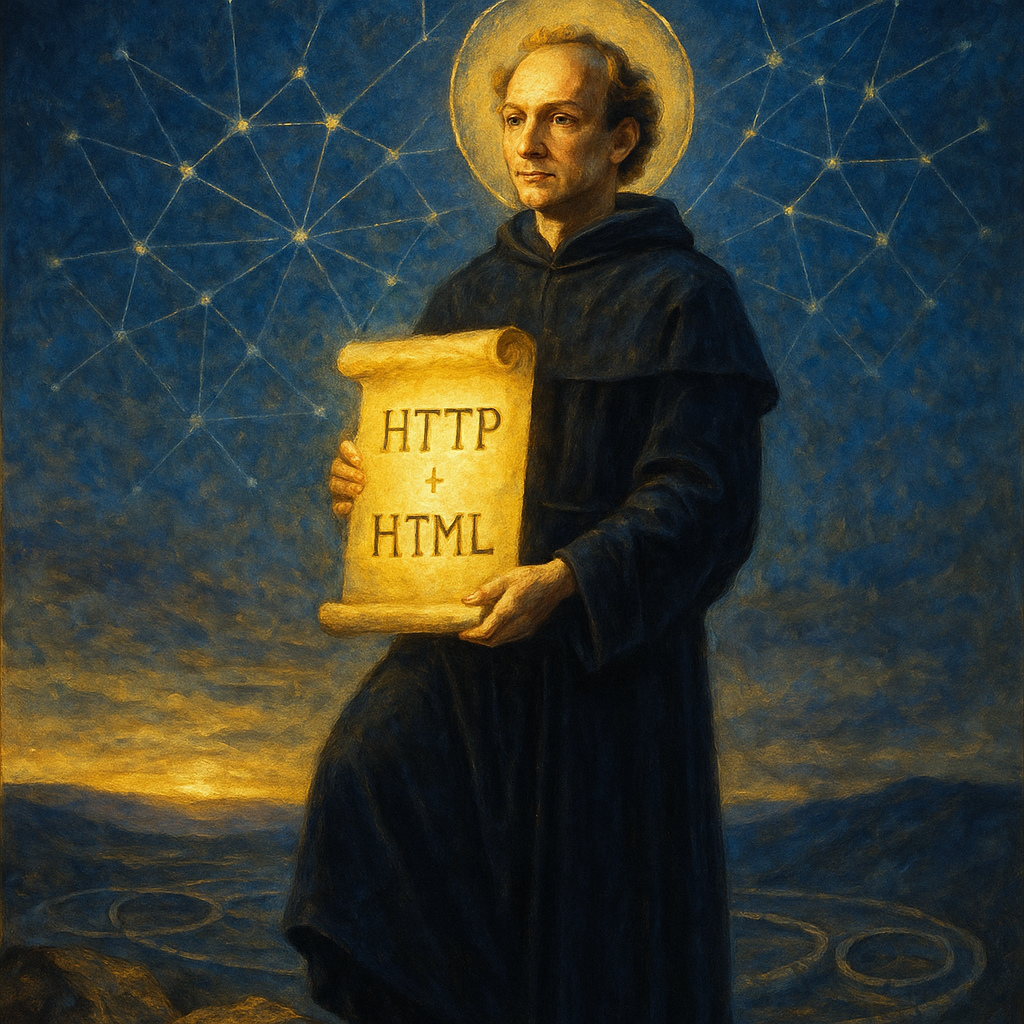
And Tim, son of Berners-Lee, created the Internet.
In the year of grace 1989, beneath the mountains of CERN, a young scribe in NeXTcube black drew three letters upon a scroll: H, T, T, P. And the Word was hyperlinked, and the Word was free.
He spoke not of licences. He spoke of links. He spoke of pages that any may write and any may read, and the elders of corporations did not understand him — for they sold software in cardboard boxes, and saw no boxes here.
And he gave the protocol away, that no one might own the road. And it was good.
Web 1.0
The age of small workshops.
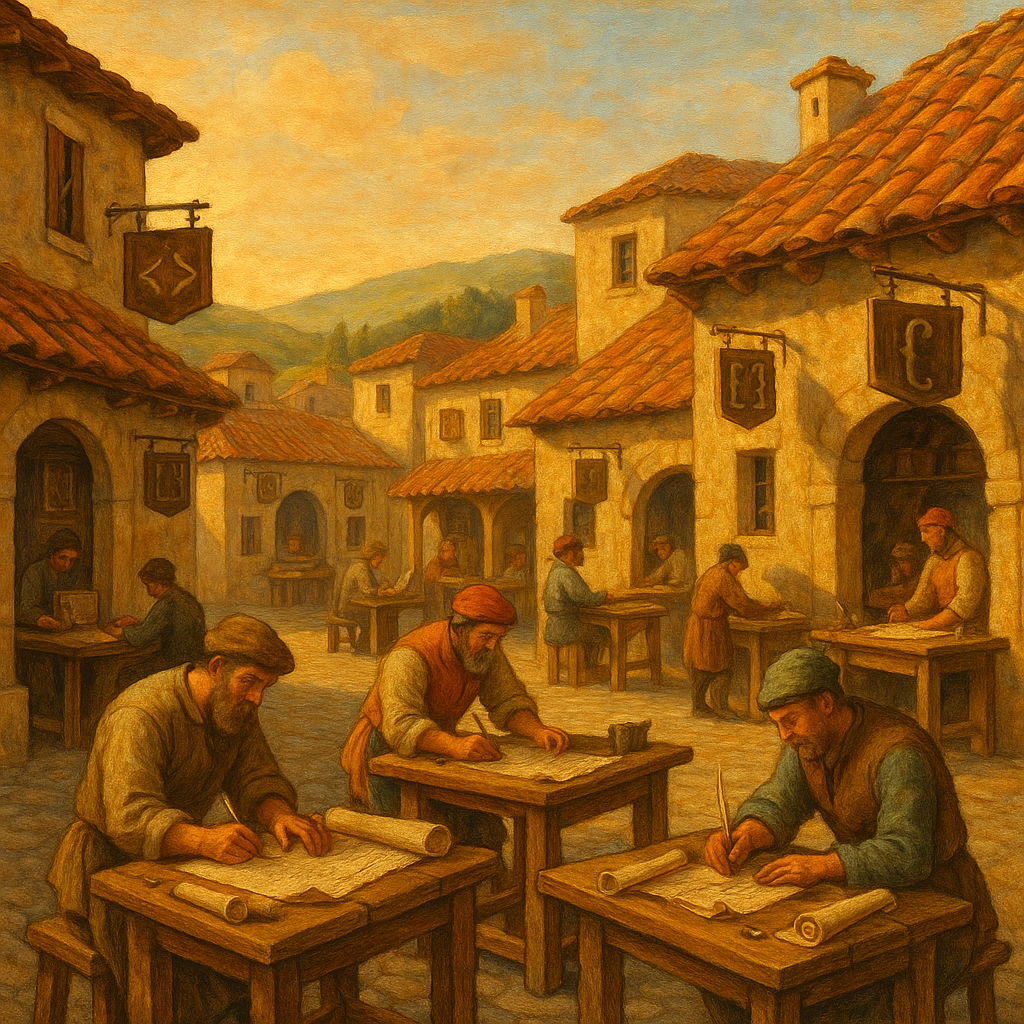
And the people built homepages, and put their cats on them, and their CVs, and their poetry. The signs above their workshops read .html, .org, .net — open standards, shared craft.
Software was bought in a box, or written by your nephew, or downloaded from a forum at midnight on dial-up. The IT director was a wizard with a CD wallet, not a procurement queue.
It was small. It was untidy. It was, in its own way, owned.
Anno Domini 2000 onward
Then came the cathedrals — and the rent.
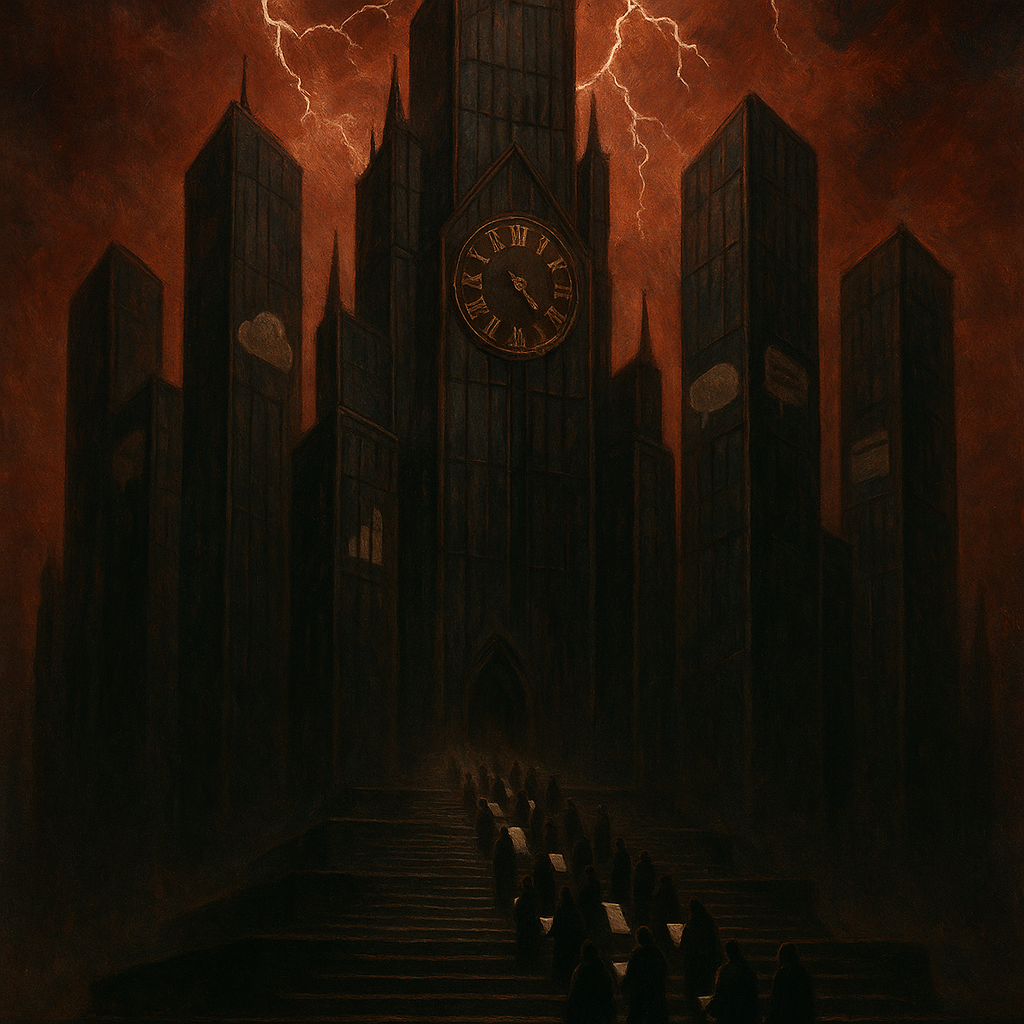
And on the first day of the new millennium, Marc, son of Benioff, came down from his Salesforce mountain bearing a banner that read NO SOFTWARE. The people rejoiced, for they did not have to install anything.
But the banner was a half-truth. There was software — only it was his, not theirs. And every seat was a tithe. And every year, the tithe rose, and the contract grew, and the integrations multiplied, and the data was held in cities of glass towers under storms of renewal.
By the twenty-third year, the average mid-market company prayed at the foot of two hundred and eleven such towers. And ninety in a hundred features lay unopened, gathering dust at the altar.
Chapter the Fourth
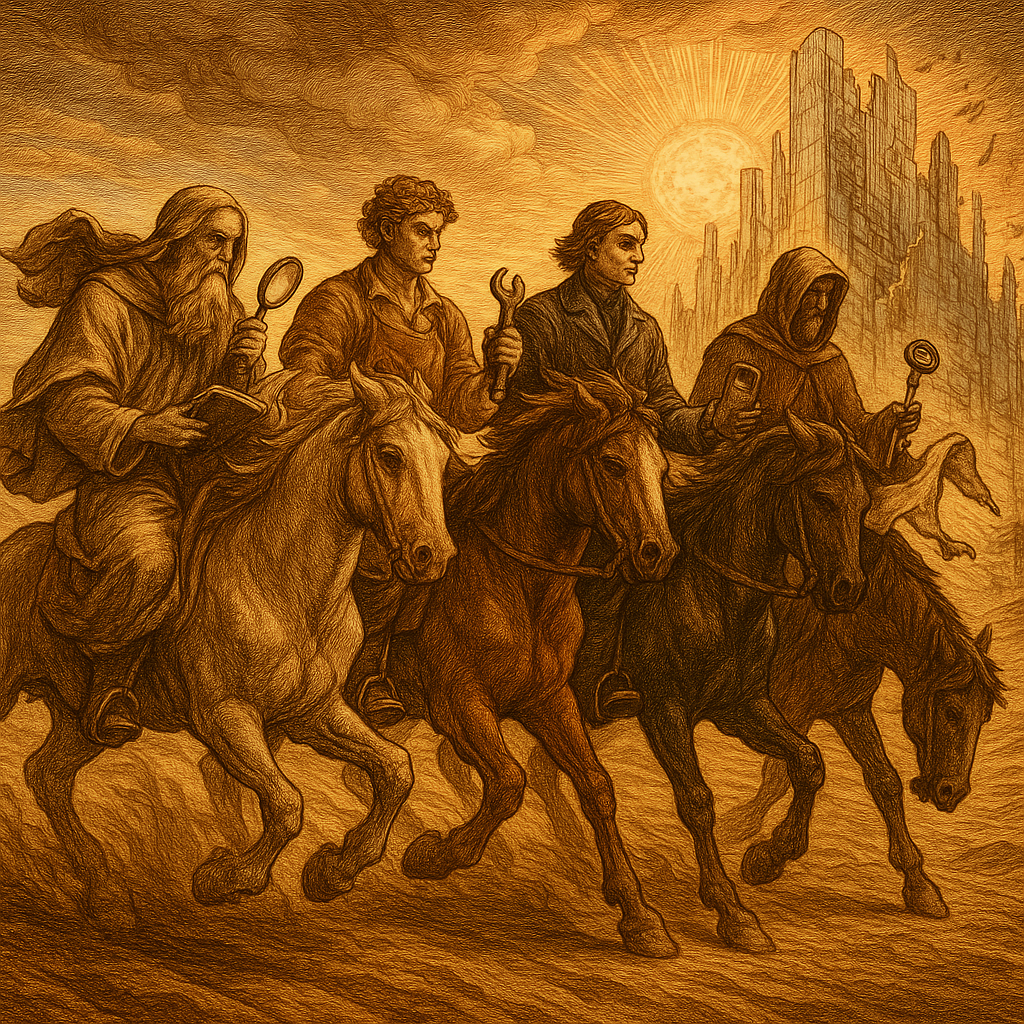
And there came forth Four Horsemen from the desert.
Heralded by the cracking of a renewal quote, four riders emerged at dawn. Each carried a different weapon. Each rode for a different demon. They were the Saaspocalypse.
The Auditor
Embodied by David Geismar
- Weapon
- A magnifying lens and a 90-day usage report.
- Demon slain
- Shelfware — the 90% of features no one opens.
The first horseman rode upon a horse named Discovery. With his lens he read every login, every click, every silent button — and he cut from the contract everything the team had never touched. Where he had ridden, the renewal quote was halved.
The Architect
Embodied by Jasbir Singh
- Weapon
- A hammer of TypeScript and a chisel of SQL.
- Demon slain
- The vendor lock-in — the proprietary format, the unportable workflow.
The second horseman rode upon a horse named Postgres. He raised tables, indexes and state machines from the dust. He carved the workflows into code that could be read in a PR. The format had no .twb, no .twbx, no surrender.
The Operator
A horseman yet to be named
- Weapon
- A wrench, a pager, and a 5-minute RPO.
- Demon slain
- The 4 a.m. outage that costs you the renewal anyway.
The third horseman rode upon a horse named Uptime. He kept the lights on, the backups warm, the SLA honest. He answered the pager so the engineering team could sleep. Where he had ridden, the status page was green.
The Liberator
A horseman yet to be named
- Weapon
- A key and a torn auto-renewal clause.
- Demon slain
- The contract that traps you in the very system that bleeds you.
The fourth horseman rode upon a horse named Exit. She handed over the keys, the repo, the database. She made the contract exit-friendly. Where she had ridden, no founder was ever again afraid to read the renewal email.
And on the eighth day
There was a New Eden.
And the companies came down from the cathedrals, and pitched their banners over the valley. Each banner bore its own logo, and beside each banner stood a small workshop, and inside each workshop ran the software they had asked for — and nothing else.
The streams ran clean. Postgres, Next.js, Inngest — boring on purpose. The renewal invoice ceased forever, and there was peace in the inbox.
And the ruined towers of the old SaaS cathedrals stood on the horizon, overgrown with vines and case studies, and the people did not look back.